
To help you plan your participation, below is an overview of the daily schedule for the 3rd European Carbon Farming Summit. Each day combines plenary Sessions, parallel Sessions, and dedicated networking moments, with regular breaks throughout the programme.
Summit schedule overview
Day 1 – Setting the scene
| 08:00 – 09:00 | Registration |
|---|---|
| 09:00 – 09:30 | Inaugural Welcome to ECFS26, with interventions from Saskia Keesstra (Climate KIC, ECFS26 Event Coordinator), Tristano Bacchetti De Gregoris (SAE Innova, Credible Project Coordinator) and Hon. Francesco Lollobrigida (Italian Minister of Agriculture) |
| 09:30 – 09:45 | Inspirational Opening Keynote Presentation by Kirsten Dunlop (Climate KIC) |
| 09:45 – 11:00 | Plenary Session 1: Carbon farming for climate mitigation, biodiversity and sustainable agriculture and forestry |
| 11:00 – 11:30 | Coffee break |
| 11:30 – 13:00 | Parallel Sessions 1 |
| 13:00 – 14:30 | Lunch |
| 14:30 – 14:45 | Keynote Presentation by Alessandra Zampieri (Joint Research Center) |
| 14:45 – 15:00 | Keynote Presentation by Francesco Musardo (Radica, formerly Alberami) |
| 15:00 – 16:00 | Plenary Session 2: Financing the transition: current trends and emerging opportunities |
| 16:00 – 16:15 | Transition break |
| 16:15 – 17:45 | Parallel Sessions 2 |
| 17:45 – 19:15 | Networking, Exhibition and Poster Session 1 |
Day 2 – Deep dives and exchange
| 08:00 – 09:00 | Registration |
|---|---|
| 09:00 – 09:45 | Keynote Presentation on Policy Updates by Mirco Barbero (DG Env), Marianna Paolino (DG Agri) and Valeria Forlin (DG Clima) |
| 09:45 – 11:00 | Plenary Session 3: Common objectives: carbon farming for everyone? |
| 11:00 – 11:30 | Coffee break |
| 11:30 – 13:00 | Parallel Sessions 3 |
| 13:00 – 14:30 | Lunch |
| 14:30 – 14:50 | Keynote Presentation by Panos Panagos (EUSO) |
| 14:50 – 16:00 | Plenary Session 4: Managing Risk in Carbon Farming: Uncertainties, MRV, Liabilities, and Insurance |
| 16:00 – 16:15 | Transition break |
| 16:15 – 17:45 | Parallel Sessions 4 |
| 17:45 – 19:15 | Networking, Exhibition and Poster Session 2 |
Day 3 – Looking ahead
| 08:00 – 09:00 | Registration |
|---|---|
| 09:00 – 10:30 | Parallel Sessions 5 |
| 10:30 – 11:00 | Coffee break |
| 11:00 – 12:30 | Plenary Session 5: The Next Steps for Carbon Farming - Broadening Beyond Agriculture |
| 12:30 – 13:00 | Plenary farewell |
| 13:00 – 14:30 | Lunch |

Final Programme
Access the final programme for the 3rd European Carbon Farming Summit. Three days of Sessions, discussions, and networking to accelerate climate action across Europe
DownloadGeneral Themes of the Summit
The ECFS26 will revolve around five main themes and dedicated innovation sessions:
A.
From practice to impact
Practical examples and results from implemented carbon farming projects
B.
Thinking beyond carbon
Exploring holistic approaches that put the focus on the co-benefits (environmental and social) of carbon farming.
C.
Standards, policy, and ownership rights
Untangling ownership rights, from farmers to buyers of certificates, from insetting schemes to national inventories.
D.
Financing carbon farming at scale
Unlocking funding and business models to scale carbon farming.
E.
Building robust and flexible MRV
Developing monitoring tools that are rigorous yet practical.
F.
Innovation Sessions
Keynote Presentations
Tuesday 17th
All keynote presentations take place in the GIOTTO ROOM
Inspirational Opening
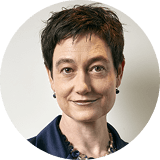 Kirsten Dunlop
Kirsten Dunlop has been the Chief Executive Officer at EIT Climate KIC since 2017, leading the organisation with a deep conviction in our capacity to learn and evolve into a climate-resilient society. She brings over 30 years of experience catalysing systemic transformations in a career spanning academia, consulting, banking, and insurance. Kirsten serves on various Advisory Boards and is a recognized leader at the European Commission Economic and Societal Impact of Research and Innovation (ESIR) expert group.
Carbon Farming: A Pathway to Sustainable Competitiveness
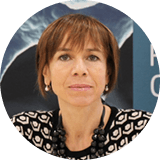 Alessandra Zampieri
Alessandra Zampieri has been the Director of the Directorate for Sustainable Resources of the European Commission’s Joint Research Centre (JRC) since October 2022. As the science and knowledge service of the European Commission, the JRC's mission is to support EU policies with independent evidence throughout the whole policy cycle. Alessandra’s career started in Brussels, where she joined the European Commission immediately after graduating in Economics from the University of Genoa.
The Journey of a Project Developer
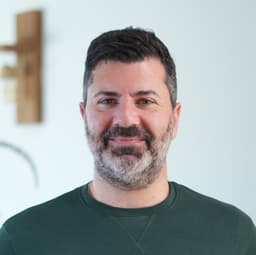 Francesco Musardo
Francesco Musardo is CEO and Co-Founder of Radica (formerly Alberami), Italy's pioneering climate-tech company in agricultural carbon markets. He developed the country's first ICROA-endorsed carbon farming project, managing 500+ farmers and delivering compliance-grade carbon removal credits. With 20+ years in international finance and sustainability, Francesco bridges climate science, regulatory frameworks, and market innovation across Mediterranean agriculture.
Keynote Presentations
Wednesday 18th
All keynote presentations take place in the GIOTTO ROOM
Soil Monitoring Directive Implementation and Carbon Farming
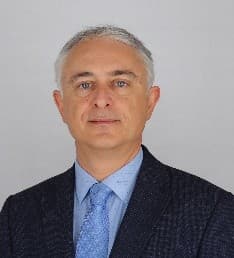 Mirco Barbero
Mirco Barbero is policy officer in soil protection and sustainable land use; he leads the Soil Team since June 2019 within the Unit Land use and management, Directorate-General Environment, European Commission. Mirco has a degree in physics and has worked for a dozen of years in the private sector as responsible for the quality assurance of products and services. He joined the Commission in 2005 where he worked mainly as team leader in internal audit, advising the management on how to improve performance, governance and risk management in several policy areas. He and his team have prepared the EU Soil Strategy and the proposal for the EU Soil Monitoring and Resilience Directive, negotiating it with the European Parliament and Council.
The Mission ‘A Soil Deal for Europe’
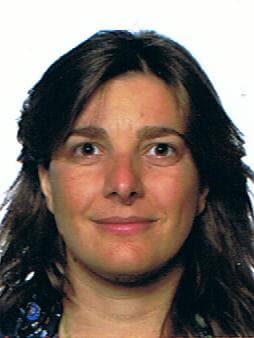 Marianna Paolino
Marianna Paolino is an experienced EU policy officer with over 15 years of service in the European Commission. She currently works in the Directorate-General for Agriculture and Rural Development (DG AGRI) as a programme officer in Unit F2 – Research and Innovation, where she is responsible for Horizon activities on climate smart agriculture. Marianna is also part of the Mission Soil Secretariat team. Her multidisciplinary background in agronomy, biotechnology, and biochemistry is complemented by extensive experience in policy development on organic trade, food safety, and sustainability. Throughout her career, Marianna has played key roles in shaping EU policies and legislation on plant protection products and organic production, contributing to the achievement of the EU’s Green Deal and sustainability objectives. She holds a PhD in Biochemistry, Cellular and Molecular Biology.
State of Play and Next Steps for Carbon Farming Certification in the EU
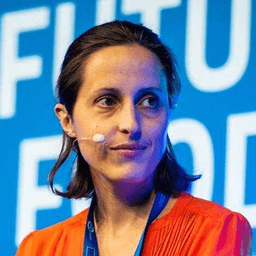 Valeria Forlin
Valeria Forlin is the Deputy Head of Unit for Land Economy and Carbon Removals, at the European Commission’s Directorate-General for Climate Action, where she is specialised in the land sector's pivotal role in combating climate change. Her work focuses on reducing agricultural emissions, enhancing carbon sinks in soils and forests. With a background in environmental economics, she previously contributed to European space policies at UCLouvain and worked extensively in microeconomics, industrial organization, and public economics.
Providing High-Quality Data and Developing Risk Assessment for Carbon Removals
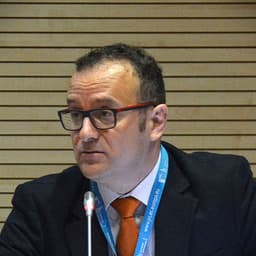 Panos Panagos
Panos Panagos is the project leader of the EU Soil Observatory (EUSO). Panos has a PhD in soil erosion modelling from University of Basel, and Master in Business Administration from Patras University and an Information Technology degree from Athens University of Economics & Business. Panos lead the European and Global soil erosion assessments and contributes to modelling assessments of soil organic carbon, diffuse pollution and nutrients in soil.
Plenary Session 1
Carbon farming for climate mitigation, biodiversity and sustainable agriculture and forestry.
Carbon farming represents an opportunity to support the transition to more sustainable land uses. This high-level policy session focuses on the efforts made by the European Commission to align climate targets and farmers and foresters’ aspirations. Panel Session Moderator
Saskia Keesstra
Dr. Saskia Keesstra is Senior Researcher Sustainable land and water management at Climate KIC with a background in Physical Geography. She also part-time works at Wageningen Environmental Research. She works on finding nature-based solutions in a socio-economic sustainable system to facilitate the transition towards climate neutral and resilient regions on topics like soil, climate adaptation and water management; specifically in the agri-food system and forestry. She is also one of the main organisers of the Carbon Farming Summits.
 Invited Panellist
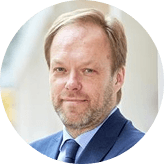
Kurt Vandenberghe
Kurt Vandenberghe has been the Director-General for Climate Action (DG CLIMA) at the European Commission since January 2023. Before that, he acted as the Green Deal and Health advisor to President Ursula von der Leyen, Director for Policy & Programming of DG Research and Innovation, and Acting Director for Research & Innovation Outreach. Kurt holds degrees in Public and International Affairs and International Relations from Universities in Belgium, Italy and the US.
 Invited Panellist
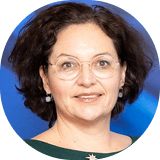
Elisabeth Werner
Elisabeth Werner has been the Director-General for Agriculture and Rural Development (DG AGRI) at the European Commission since May 2025. With almost 30 years of experience within the European Commission, Elisabeth brings a strong combination of institutional knowledge, budgetary expertise and coordination skills across a wide range of policy areas. Her background includes extensive work on a number of policy dossiers, including land transport, competitiveness, clean industry and sustainability. Elisabeth holds degrees in Economics and European Affairs.
 Invited Panellist
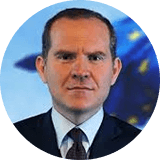
Massimiliano Giansanti
Massimiliano Giansanti, born in Rome, president of Confagricoltura (General Confederation of Italian Agriculture), has also been president of COPA (Committee of Professional Agricultural Organizations of the European Union) since September 2024. He is president of Agricola Giansanti srl and CEO of the Di Muzio Agricultural Group, which operates in the provinces of Rome, Viterbo, and Parma, companies specialize in the production of cereals, kiwis, milk, and livestock products, that are active in the agro-industrial and agro-energy sectors through the production of electricity and photovoltaic energy. He also produces Parmigiano Reggiano cheese in Parma and high-quality cow's milk for the Centrale del Latte di Roma.
 Invited Panellist
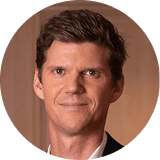
Rémi Rocca
Rémi Rocca has been serving as the Global Vice President of Sustainability for Royal Canin at Mars since January 2025. Prior to joining Mars, Rémi held senior leadership roles at McDonald's in both France and the United States. Most recently, he served as Senior Director of Impact, overseeing Corporate Communications, Public Affairs, ESG, and Philanthropy. During his tenure, he led transformative programs including the establishment of a Global Regenerative Agriculture Platform, and significant advancements in carbon emissions reduction.
Plenary Session 2
Financing the transition: current trends and emerging opportunities
The voluntary demand for soil carbon credits, at the price needed to unlock change, is still not sufficient to enable a quick roll out of carbon farming across the EU. This multi-actor session explores current trends and potential solutions for directing resources towards carbon markets and corporate actions. Panel Session Moderator
Giulia Stellari
Giulia Stellari is a Managing Director at Fall Line Capital, leading impact initiatives in farmland and venture portfolios. Previously at Unilever, she managed global sustainable procurement programs, advancing digital agriculture, transparency, and greenhouse gas reduction programs. She co-founded AgSquared, a farm data management platform, and holds a Ph.D. in Plant Molecular Biology from Cornell and an A.B. in biology from Harvard. Giulia is also a non-executive director at SIPEF, Chair of Cool Farm Alliance, former member of the SBTi Technical Advisory Group, advisor to UNHCR on carbon removals, and an expert on the EU Expert Group on Carbon Removals.
 Invited Panellist
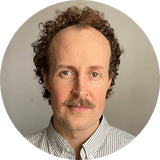
Hugh McDonald
Hugh McDonald is a Senior Fellow at Ecologic Institute, where he coordinates the economics team. An environmental economist, he researches and advises on policies to promote carbon removals, reduce agricultural emissions, and finance biodiversity. His work on carbon farming includes publications for the European Commission's DG CLIMA, the European Parliament, and the German Environment Agency, among others, as well as support to the European Scientific Advisory Board on Climate Change.
 Invited Panellist
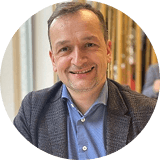
Christian Holzleitner
Christian Holzleitner is Head of Unit responsible for Land economy and Carbon removals at the European Commission's Directorate-General for Climate Action. Previously, he worked as Head of Unit for Finance for Innovation and Land Use and assistant to the Director-General for Climate Action covering all issues related to EU and international climate policy; and at the Directorate-General for Competition in the area of State aid for services of general economic interest in the postal, transport, and health sectors. Christian is an economist and holds a PhD from the University of Linz (Austria).
 Invited Panellist
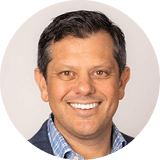
Chris Adamo
Chris Adamo is head of Global Sustainability Impact & B Corp, assisting Danone to create social and environmental impact throughout its business as a certified B Corp. Chris helps Danone build sustainability strategies and policies to implement its Danone Impact Journey. Prior to joining Danone, Chris spent over a decade in the U.S. government leading strategies on agriculture, natural resources, and climate change. He served as chief of staff for the White House Council on Environmental Quality under President Barack Obama and led the Senate Committee on Agriculture, Nutrition and Forestry.
 Invited Panellist
Gabriella Cevallos
Gabriella Cevallos is a manager within the agrifood team at Deloitte Sustainability France. She has worked over the years on carbon accounting for the agricultural and forestry sectors, helping to design decarbonization or regenerative agriculture strategies for the agrifood sector, as well as in engaging suppliers to support decarbonization and strengthening the resilience of value chains.
 Invited Panellist
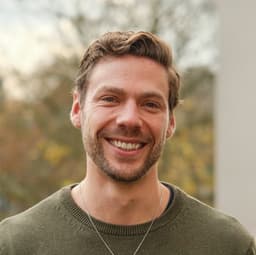
Gerdus van der Laarse
Gerdus van der Laarse is a systemic finance strategist at Metabolic, a systems change organization that supports bioregional transitions to a circular, regenerative economy. With a multidisciplinary background in engineering, policy, and finance, he focuses on orchestrating capital for large-scale systems change. His work includes designing capital orchestration approaches that enable regenerative agricultural practices, scaling decarbonization technologies in the agrifood sector, and shaping regional transition strategies. By connecting financial, policy, and industry actors, he helps turn systemic transition plans into investable action.
Plenary Session 3
Common objectives: carbon farming for everyone?
While carbon farming is a relatively new concept, movements working towards more sustainable agricultural practices are not. This session brings together representatives of young farmers, and organic, regenerative, and climate smart agriculture, to explore the synergies and tensions between the objectives and methods of carbon farming and the goals and approaches of these movements.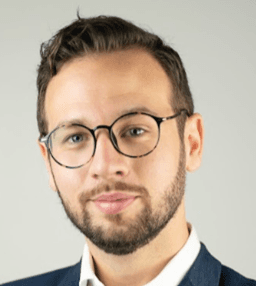 Panel Session Moderator
Mathieu Mal
Mathieu Mal works at the European Environmental Bureau (EEB), Europe’s largest network of environmental citizens' organisations, where he leads the policy work and strategy on the intersections between agriculture and climate. He coordinates the policy work in the CREDIBLE carbon farming project, co-leads the climate work of the EU Food Policy Coalition, and is a member of the EU Commission’s Expert Group on Carbon Removals.
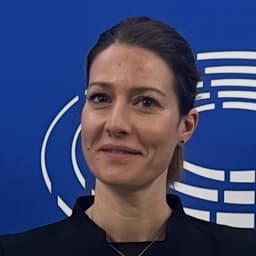 Invited Panellist
Martina Dal Grande
Martina Dal Grande is a winegrower based in the Conegliano Valdobbiadene wine region. For the past seven years she has been managing her vineyards, implementing regenerative agriculture practices. She is a member of ANGA, the youth association of Confagricoltura, for which she served as a delegate to CEJA, the European Council of Young Farmers. Her work focuses on knowledge dissemination and sharing of best practices in agriculture, based on the belief that continuous training, practical field experience, and the systematic analysis of results represent the pathway to achieving tangible outcomes.
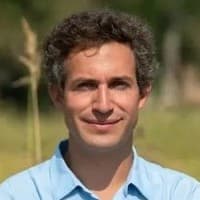 Invited Panellist
Marco Paravicini Crespi
Marco Paravicini Crespi is a biodynamic farmer and owner of Cascine Orsine Farm in Bereguardo. He brings over ten years of experience in the organic retail and distribution sector with EcorNaturasì. He currently serves as Vice President of FederBio, the Italian federation for organic and biodynamic agriculture.
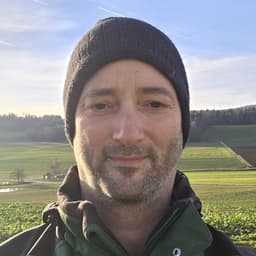 Invited Panellist
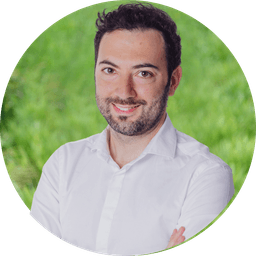
Peter Fröhlich
Peter Fröhlich is a farmer, agronomist, and entrepreneur with over 20 years of experience driving agricultural innovation. A founding member of EARA and a prominent voice in European regenerative farming. Peter has spent the past decade advancing data interoperability, precision agriculture, and digital agronomy. His work now converges in AgriPurpose, a leading approval framework for Regenerative Agriculture.
 Invited Panellist
Ivano Assenza
Ivano Assenza is a Carbon Markets Specialist at the Food and Agriculture Organization of the United Nations (FAO), working at the intersection of carbon finance, climate-smart agriculture and nature-based solutions in European and international policy frameworks. His work focuses on ensuring that carbon markets contribute to resilient agrifood systems, deliver measurable climate outcomes, strengthen farmer livelihoods and generate co-benefits such as soil health, biodiversity and ecosystem restoration.
Plenary Session 4
Managing Risk in Carbon Farming: Uncertainties, MRV, Liabilities, and Insurance
Managing risk is central in carbon farming, as uncertainty in MRV systems, liability for reversals and project failures, and evolving financial and insurance mechanisms directly shape environmental credibility and market viability. This session will unpack how these factors are handled across the carbon/agricultural value chain —from measurement to finance and implementation— and explore how insurance and adaptive management can make climate projects more resilient and trustworthy.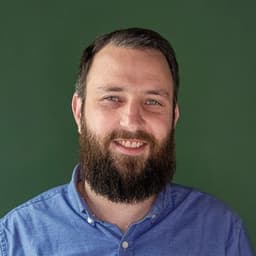 Panel Session Moderator
Hannes Mollenhauer
Hannes Mollenhauer is a researcher at the Helmholtz Centre for Environmental Research (UFZ), working at the interface of climate action and land-use management. His work focuses on carbon farming and climate-smart agriculture, with particular attention to drought stress prediction, risk management, and MRV (monitoring, reporting and verification). He supports science-to-policy exchange and stakeholder dialogue.
 Invited Panellist
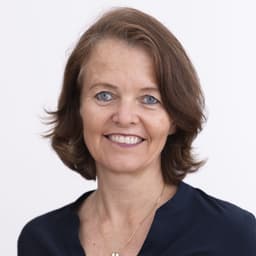
Alexa Mayer‑Bosse
Alexa Mayer‑Bosse leads Nature‑based Risk Solutions at Munich Re. As a senior underwriter in agriculture, forestry, carbon, and parametric insurance, she specializes in assessing production risks and structuring risk‑transfer solutions. Her work leverages advanced remote‑sensing technologies. She holds an MBA in finance, marketing and ICT and is an active family farmer.
 Invited Panellist
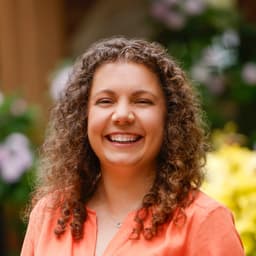
Anastasia Volkova
Anastasia Volkova is a visionary leader shaping the category of agricultural resilience. She has more than a decade of experience in academia and business, creating innovative software solutions. Anastasia holds a Ph.D. in aerospace engineering and has been named a 2023 UBS Global Visionary, one of BBC's 'Top 100 Women' and is on the TIME100 Next list.
 Invited Panellist
Constantinos Hatziparadisis
Constantinos Hatziparadisis is a Greek farmer based in Northern Greece and runs the Hatziparadisis farm. He is associated with modern, lower-impact cultivation methods such as conservation agriculture and reduced tillage, and has experience with practices aimed at cutting the carbon footprint of crop production. He has also been involved in EU sustainability and innovation initiatives in agriculture. In the LILAS4SOILS context, he is connected to the project’s Living Labs approach supporting carbon-farming adoption in Greece (GRECFL²).
 Invited Panellist
Francesco Morari
Francesco Morari is professor of soil and water conservation and soil physics at the University of Padova, Italy. He is also adjunct Professor at the Crop & Soil Department, University of Georgia, USA. He is the director of the Experimental Farm of the University of Padova and his major research interests are on soil mapping and precision agriculture, sustainability of agricultural systems and soil physics, and GHGs monitoring and mitigation.
 Invited Panellist
Ana González Peláez
Dr. Ana Gonzalez Pelaez is Head of Agroecosystems at PlanetaryX, focused on scaling nature and credit markets for regenerative agriculture. She grew up on a farm in Spain and has dedicated her career to international economic development, agriculture and climate risk finance, holding senior roles across the public and private sectors, academia and international partnerships. Most recently, she co-led the European Commission and European Investment Bank publication quantifying the climate risks to EU-27 agriculture and insurance systems. She is a 2026 Awardee of the Fin-Erth Women in Climate Awards (Agriculture).
Plenary Session 5
The Next Steps for Carbon Farming — Broadening Beyond Agriculture
This session will explore the future of carbon farming as a key instrument for promoting sustainable land and resource use across multiple sectors. While carbon farming has traditionally been associated with agriculture, this discussion will broaden the perspective to include its applications and opportunities in forestry, biodiversity, and the bioeconomy value chain as a whole. It will discuss and compare the market development constraints and perspectives in these different sectors. The way CRCF will/could help support the broad objective of increasing the LULUCF carbon sink will also be addressed. Panel Session Moderator
Daniel Zimmer
Dr. Daniel Zimmer has an engineering and hydrology background and is leading the Sustainable Land Use activities at Climate KIC. He is also one of the main architects of the European Carbon Farming Summits and is co-leading the Finance Design Team of the 1000 Landscapes for 1 Billion people initiative. He has been before the Chief Executive of the World Water Council where he developed a global experience on water-related issues spanning from research & engineering to finance and geopolitics.
 Invited Panellist
Lucia Perugini
Lucia Perugini is an expert on carbon farming certification and LULUCF at the European Environment Agency. With a PhD in forest ecology, her background spans forestry and climate change science. Previously at CMCC Italy, she contributed to major EU research projects and served for 15 years as Italy's UNFCCC delegate on CDM, LULUCF, agriculture, and REDD+.
 Invited Panellist
Anneli Lundmark
Anneli Lundmark is CEO of Nordiskt Naturkapital (Nordic Nature Capital) with extensive experience in developing and commercialising new business models across the forest value chain. She acts as a key connector between landowners, buyers and policymakers, translating carbon forestry frameworks into investable projects and real buyer demand. She currently focuses on project development and the sale of high-quality carbon credits in the Nordic region.
 Invited Panellist
Anna Uebachs
Anna Uebachs is a Senior Carbon Project Developer at aeco GmbH with an interdisciplinary background in natural and social sciences. They have extensive experience developing carbon projects and methodologies across a range of project types. At aeco, they currently focus on scaling peatland rewetting by combining hands-on field experience, farm-level stakeholder engagement with the practical requirements of carbon finance.
 Invited Panellist
John Brosnan
John Brosnan joined the Irish Co-operative Organisation Society (ICOS) in June 2022 in the newly-created post of Bioeconomy Executive, working primarily on advancing co-operative involvement in the growing and evolving Bioeconomy. John has been working in the agri-food sector for over 20 years, beginning in the food service sector before moving on to work for farmer-owned farm services co-operative, FRS for 16 years in project and operations management. This included agri-environmental and sustainability services provided directly to farmers on behalf of Irish state and semi-state bodies.
 Invited Panellist
Tomas Lundmark
Tomas Lundmark is Professor Emeritus of Silviculture and has more than 40 years of experience in forest research, policy, and sustainable land management. He is also an active forest owner, bringing a practical perspective on how carbon removals can be implemented in real-world forestry. Today, he is CEO of Carbon Capture Company, where he works on developing high-integrity standards and certification systems for forest carbon removals aligned with the EU Carbon Removal Carbon Farming regulation (CRCF). Lundmark has contributed to expert and focus group processes supporting the design and implementation of CRCF methodologies and has extensive networks across forest owners, industry, public authorities, and EU institutions.
Invited PanellistChristian Holzleitner
Christian Holzleitner is Head of Unit responsible for Land economy and Carbon removals at the European Commission’s Directorate-General for Climate Action. Previously, he worked as Head of Unit for Finance for Innovation and Land Use and assistant to the Director-General for Climate Action covering all issues related to EU and international climate policy; and at the Directorate-General for Competition in the area of State aid for services of general economic interest in the postal, transport, and health sectors. Christian is an economist and holds a PhD from the University of Linz (Austria).
Parallel Sessions
Select a theme or time slot to view sessions.